
← All guides · October 15, 2026
How to Develop a Private Label Jelly Shoe
The short answer
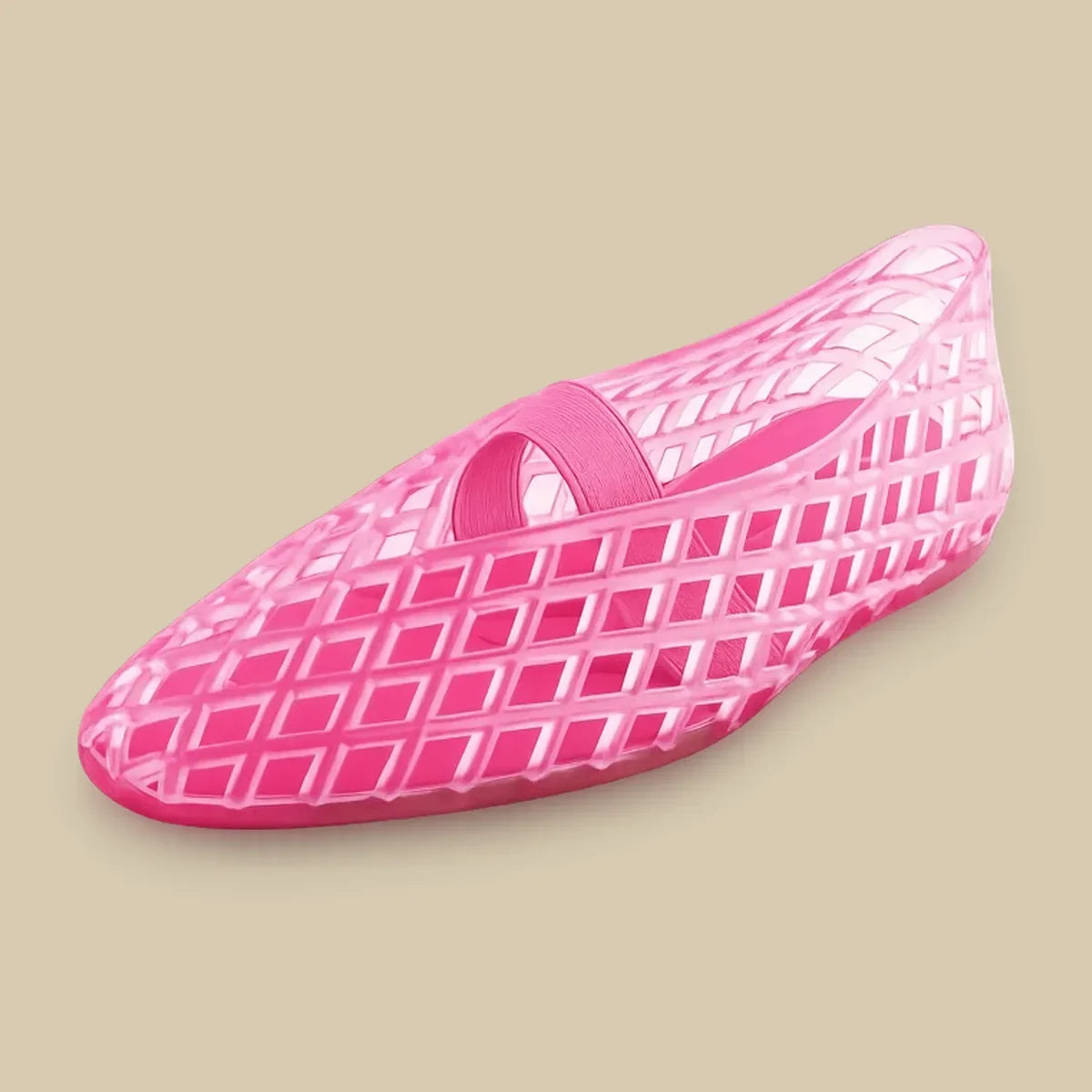
Most brands launch jellies with a private label jelly built on a mold that already exists. You choose the style, then make it yours with color, clarity, finish, a molded logo and packaging. No new tooling is needed for a first run.
A first jelly on a proven style takes about four to five months from brief to delivery. At Manhattan Shoe Company, jelly production starts at 1,000 pairs per style. Plan backward from your selling season, because jellies sell in spring and summer.
Why jellies are back
Jelly shoes have moved from nostalgia to a real category again, and they are one of the easiest shoes for a brand to add.
- They photograph well. Clear and tinted plastic catches light, so jellies stand out on a product page and on social.
- Color does the work. One style in several colors reads as a full collection.
- They are simple to wear. Waterproof, easy to clean and built for the beach, the pool and the city in summer.
- They sell in many places. Resort shops, boutiques, swim brands, kids stores and your own site.
How jelly shoes are made
A jelly is not cut and sewn like a sneaker. It is molded. A soft, flexible compound is heated and injected into a steel mold, then cooled and released as a finished shoe or as a few pieces that are joined.
That changes how you develop one:
- The mold sets the shape. Lattice, straps, buckles and sole pattern are all cut into the mold. Changing the shape means changing the mold.
- Each size needs its own cavity. A full size run is a set of molds, which is why jelly minimums are higher than for most cut and sewn footwear.
- Color is mixed into the compound. Clarity, tint and glitter are set before molding, not painted on after.
What to decide
These are the choices that make a jelly yours.
| Choice | Options | Why it matters |
|---|---|---|
| Style | Flats, lattice flats, flip flops, fisherman sandals, slides, wedges | Sets who buys it and when they wear it |
| Color and clarity | Clear, tinted, solid or patterned like tortoiseshell | The first thing a customer sees, and the easiest way to build a collection |
| Finish | Glossy, matte or glitter | Changes how the shoe looks in a photo and in the hand |
| Compound | Softness, flexibility and scent | Comfort, durability and how the shoe smells out of the box |
| Footbed | Molded jelly or a padded footbed | Comfort for all day wear |
| Branding | Logo molded into the footbed, heel or strap, plus box and hangtag | Where your brand shows on the foot and on the shelf |
Private label or a custom mold?
Private label starts from a jelly already in production. The mold is proven, so you spend your time on color, finish and branding. It is the faster, lower risk way to launch and learn which colors your customer buys. See How to Choose a Private Label Footwear Manufacturer.
A custom mold means a shape, lattice or strap no other brand has. It takes longer, and the mold is quoted per project, but the shoe is yours alone. See Custom Footwear Development: From Idea to Production.
Many brands launch on a proven jelly, then build a custom mold once the first style has proven demand.
How many pairs should you order?
At Manhattan Shoe Company, jelly production starts at 1,000 pairs per style. That minimum is spread across every size and color, so plan the split first.
- Start with two or three colors. One clear or neutral, one bright and one that fits your brand.
- Buy to a size curve. Order more in the core sizes and fewer at the ends.
- Keep the size run simple. Many jellies come in whole sizes only. Ask before you plan half sizes.
- Check against what you already sell. If your best swimsuit sells a few hundred units a season, plan your jelly against that.
For more on how minimums work, see Low MOQ Shoe Manufacturing: What Brands Should Know.
How long does it take?
A first jelly on a proven style takes about four to five months from brief to your warehouse.
- Brief and references. About 1 to 2 weeks. Styles you like, colors, finish and branding.
- First sample. About 4 weeks on a proven mold. Custom development takes 4 to 6 weeks per sample round.
- Wear test. About 1 to 2 weeks. Walk in the sample, get it wet and check the fit.
- Production. 60 to 90 days after sample approval, depending on materials and complexity.
- Freight and customs. Allow several weeks for ocean freight and clearance.
Jellies are a warm weather shoe. To have them in stores for spring, send your brief by early fall.
Mistakes to avoid
- Too many colors on the first run. It spreads your minimum thin and leaves you short in the sizes that sell.
- Skipping the wear test. A jelly can look perfect and still rub at the heel or the strap. Wear it for a full day.
- Ignoring the smell. Ask about the compound and how the shoe smells when the box is opened. Customers notice.
- Forgetting compliance. Ask about testing for the markets you sell in, especially for kids sizes.
- Missing the season. Jellies that land in August miss most of the summer.
- Pricing on factory cost. Freight, duty and packaging all come out of your margin. Price on landed cost.
Frequently asked questions
What are jelly shoes made of?
Jelly shoes are molded from a soft, flexible compound. Color, clarity and finish are mixed into the compound before the shoe is molded.
Can I put my brand on an existing jelly shoe?
Yes. That is private label. You start from a jelly already in production and make it yours with color, finish, a molded logo and packaging.
What is the minimum order for jelly shoes?
At Manhattan Shoe Company, jelly production starts at 1,000 pairs per style. Jellies are molded, so minimums are higher than for most cut and sewn footwear.
How long does it take to make jelly shoes?
About four to five months for a proven style, from brief to delivery. Production alone takes 60 to 90 days after the sample is approved.
Can I design my own jelly shoe?
Yes. Custom development builds a new mold for your shape and pattern. The mold and samples are quoted per project before any work begins.
Do samples cost money?
Yes. Sampling is paid and quoted per project, based on the style and how much is new. You receive the quote before work begins.
Start your project
Manhattan Shoe Company is a jelly shoe manufacturer with more than 20 years in the footwear industry. Start your project with your brand, the jelly you have in mind, your quantity and when you need it in stores.